Is your car’s paint looking faded, chalky, or just beaten down from years of San Antonio sun? Or maybe you want a completely different look for your vehicle — without locking yourself into a permanent repaint?
Both are common problems for drivers here. The combination of intense UV exposure, 100°F summers, and daily highway driving creates conditions that wear on exterior paint faster than most people expect. Car wraps have become a practical answer to both the protection and appearance side of that problem.
This guide of Car Wraps San Antonio breaks down what car wraps actually are, which type fits your situation, how they compare to paint and paint protection film, and when a wrap might not be the right call — all from a local vehicle care perspective.
What This Guide Covers
- What car wraps are and how they work
- The main types — full, partial, matte, gloss, chrome delete, commercial
- Why San Antonio’s climate makes paint protection especially important
- Wrap vs. paint vs. paint protection film — side-by-side comparison
- The installation process, step by step
- Who car wraps are a great fit for — and who they’re not
- Maintenance tips to get the most out of your investment
What Are Car Wraps?
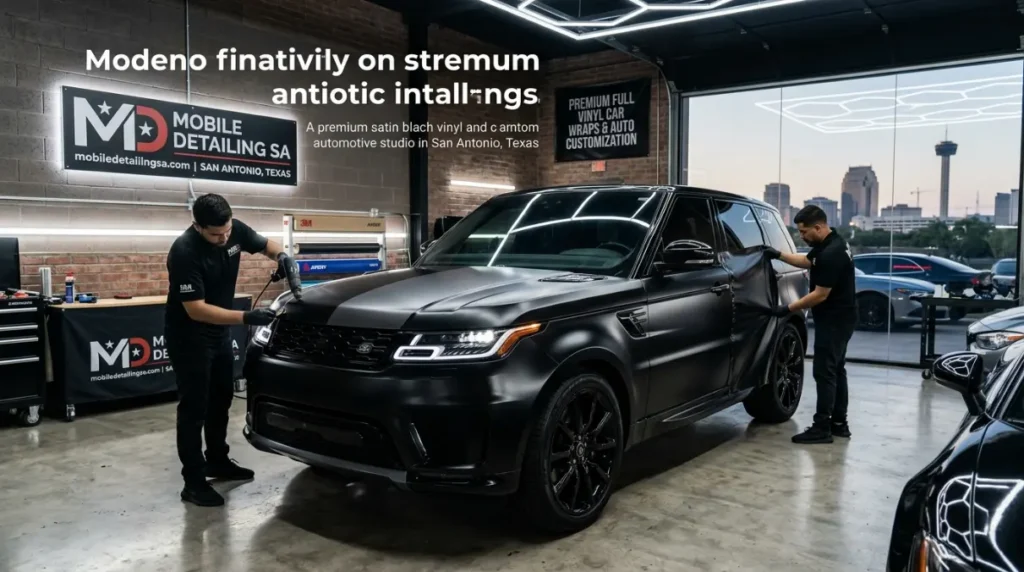
A vehicle wrap is a large-format adhesive vinyl film applied directly over your car’s existing paint. Installers stretch it across body panels, trim it around curves and edges, and heat-set it for a clean, seamless finish that holds up to daily driving.
The biggest thing that sets wraps apart from paint: they’re reversible. When removed correctly by a professional, the original factory paint underneath stays untouched. That matters a lot if you lease your vehicle, plan to sell it eventually, or simply want the option to change things down the road.
Modern vinyl films — premium brands like 3M and Avery Dennison — hold color well, resist UV fading, and can replicate finishes that paint struggles to match: matte, satin, color-shift, brushed metal, carbon fiber texture. A wrap done right is genuinely difficult to distinguish from paint at normal viewing distance.
Types of Car Wraps in San Antonio
Full Wrap
Covers the entire exterior — hood, roof, doors, bumpers, all of it. The most comprehensive option and the most impactful visual result. Best for a complete color change or a vehicle that needs total surface coverage.
Partial Wrap
Covers specific panels or sections only. A cost-effective way to accent certain areas, add branding to a commercial vehicle, or protect high-exposure zones without committing to a full wrap. Common for hoods, roofs, and door panels.
Matte, Gloss & Satin Finishes
These are the three most popular finish options. Gloss looks like traditional paint. Matte has a flat, modern aesthetic that’s very popular right now. Satin sits in between — a subtle sheen without being fully glossy. None of these are cost-effective to replicate with traditional paint.
Chrome Delete
This is a targeted process that replaces factory chrome trim — door handles, mirror caps, window surrounds, grille accents — with matte or gloss black vinyl. The result is cleaner and more intentional-looking. It’s a subtle change that makes a real visual impact, especially on trucks and luxury vehicles.
Commercial & Fleet Wraps
For business owners in San Antonio, wrapped vehicles are one of the most efficient forms of local advertising. A branded work van or truck gets seen by thousands of people weekly on I-10, I-35, and Loop 1604 — at a one-time cost that typically runs far less than traditional advertising.
Why Car Wraps Are a Smart Move in San Antonio
Most wrap guides are written for a generic national audience. San Antonio’s specific driving and weather conditions change the calculus a little.
- UV exposure is intense and year-round. The Texas sun angle combined with minimal cloud cover means paint faces serious oxidation risk — especially on horizontal surfaces like the hood and roof where direct exposure is highest.
- Summers regularly push past 100°F. Sustained heat accelerates clear coat breakdown on unprotected paint, causing fading and chalking faster than in milder climates.
- Highway rock chips are constant. Daily commuting on I-10, I-35, and Loop 1604 puts your front bumper and hood in the path of road debris every single day. A wrap adds a physical barrier — thin, but real.
- Dust and construction grit. San Antonio has active construction across major corridors. Abrasive particulates work into paint surfaces and accelerate surface wear over months and years.
- Resale value. Original factory paint in clean condition is worth more to buyers. Protecting it under a wrap — rather than letting it fade or chip — is a legitimate resale strategy, not just a styling choice.
Wrap vs. Paint vs. Paint Protection Film: Side-by-Side
This is the comparison most San Antonio drivers actually need. Here’s an honest look at how these three approaches differ:
| Factor | Vinyl Wrap | Full Repaint | Paint Protection Film |
| Cost | Moderate — less than quality paint | High — labor-intensive | Higher — premium material |
| Reversible | Yes — remove cleanly | No — permanent | Yes — professional removal |
| UV Protection | Good — shields paint daily | None added | Excellent — blocks UV + heat |
| Rock Chip Guard | Light surface barrier | None | Superior — absorbs impact |
| Finish Options | Matte, gloss, satin, textured | Standard paint colors | Clear only (invisible) |
| Lifespan | 5–7 years with care | 10+ years if quality | 8–10 years |
| Best Use | Look changes, fleet branding | Permanent color change | High-impact protection zones |
Bottom line: Vinyl wraps are the strongest choice for appearance changes, fleet branding, and lease vehicles. For maximum paint defense — especially against rock chips on Texas highways — paint protection film handles that better. Many vehicle owners use both: PPF on the front bumper and hood, a wrap on the rest of the car.
Ask about combining paint protection film with a full wrap — we’ll walk you through what makes sense for your vehicle →
The Wrap Installation Process: Step by Step
Understanding what goes into a professional installation helps you evaluate quality and set realistic expectations. Here’s what the process actually looks like:
- Surface prep — The vehicle gets a thorough wash, clay bar treatment, and decontamination. Any wax, residue, or surface contamination that could affect adhesion is fully removed.
- Paint inspection — The installer checks for chips, rust, lifting paint, or body damage. Wrapping over compromised paint causes adhesion problems and poor results later.
- Vinyl cutting — Film is cut to panel dimensions using precise templates or plotters. Premium installers prep cuts ahead of time to minimize in-process adjustments.
- Application — Vinyl is applied panel by panel using heat guns and squeegees to stretch the film smoothly around curves, bumpers, and recesses without bubbles or wrinkles.
- Edge finishing — Door jambs, mirror edges, trim lines, and tight corners are carefully tucked and sealed. Edge quality is where skilled installs separate from average ones.
- Final inspection — The completed wrap is reviewed under proper lighting for lifted edges, bubbles, or alignment issues before the vehicle is returned.
A full wrap on a standard car typically takes 1 to 3 days depending on vehicle size and wrap complexity. Any installer promising same-day completion on a full wrap is a red flag.
Who Car Wraps Are Best For
- Lease vehicle drivers who want a temporary color change without voiding their lease terms or altering factory paint permanently.
- Business owners looking to brand commercial vehicles across San Antonio with a one-time investment that pays ongoing visibility dividends.
- Luxury and exotic vehicle owners who want to protect resale value while experimenting with a different look that can be reversed before selling.
- Car enthusiasts who update their vehicle’s appearance regularly and want full reversibility built into every change they make.
- Daily commuters looking for basic surface protection and a refreshed appearance at a cost lower than a quality respray.
When Car Wraps Are NOT the Right Choice
This is worth saying clearly, because not every vehicle is a good wrap candidate and not every goal is best served by vinyl.
- Damaged or peeling paint: Vinyl follows every contour underneath. If your paint is lifting, heavily oxidized, or damaged, the wrap will look poor and won’t adhere properly. The paint needs to be addressed first.
- Rock chip protection is the priority: If your main concern is defending against highway debris on a daily commuter, paint protection film is the more effective product. Vinyl wrap is not a substitute for PPF in high-impact zones.
- Permanent long-term color change: If you plan to keep the vehicle for 10+ years and are certain about the new color, a quality respray may offer better long-term value than replacing a wrap every 5–7 years.
- Budget-only installs: A cheap wrap done with inferior vinyl or poor technique looks worse than factory paint within a year — especially in San Antonio heat. If the budget doesn’t support quality, it’s better to wait.
Why San Antonio Drivers Choose Mobile Detailing SA
We’re a mobile vehicle care service, which means we bring the work to you — your driveway, your office parking lot, wherever fits your schedule. No drop-offs, no waiting rooms, no arranging a ride.
- Mobile convenience: We work around your day, not the other way around. Busy professionals and families in San Antonio tell us this matters more than almost anything else.
- Professional-grade products: We use products designed for Texas conditions — UV-resistant, heat-stable formulas that hold up through San Antonio summers and not just mild-weather use.
- Eco-conscious approach: Where possible, we use environmentally responsible products and waterless or low-water techniques appropriate for each service.
- Full-service vehicle care: Beyond wraps and paint protection, we handle ceramic coating, paint correction, interior detailing, steam cleaning, and odor removal — comprehensive care from one trusted local team.
- Local knowledge: We understand what San Antonio streets, highways, and weather do to vehicles over time. That context shapes every recommendation we make.
How to Maintain a Car Wrap in San Antonio’s Climate
Wraps require less maintenance than paint, but a few consistent habits make a real difference in how long they look sharp — especially given local conditions.
- Hand wash whenever possible. Brush-style automatic washes can catch seams and lift edges, particularly on corners and around mirrors. Touchless car washes are acceptable; brush washes are not ideal.
- Avoid high-pressure spray directly on edges and seams. A standard pressure rinse is fine; directing a pressure washer at wrapped edges is not.
- Park in shade or a covered space when you can. Continuous direct UV exposure is the single biggest factor in premature vinyl degradation in San Antonio.
- Clean bird droppings and tree sap quickly. These are acidic and will stain or etch vinyl if left to sit and bake in summer heat.
- Consider a ceramic coating on top of the wrap. A quality ceramic layer adds UV protection, creates a hydrophobic surface that repels water and road grime, and makes the wrap significantly easier to keep clean. It also extends the usable life of the vinyl — worth it for a quality wrap in this climate. Ask us about combining ceramic coating protection with your wrap for long-term results.
Frequently Asked Questions: Car Wraps San Antonio
How long do car wraps last in San Antonio?
A professionally installed wrap using premium vinyl typically lasts 5 to 7 years. San Antonio’s UV intensity and sustained heat can reduce that lifespan if the vehicle is parked outdoors constantly without shade. Applying a ceramic coating on top of the wrap adds meaningful UV resistance and pushes longevity toward the higher end of that range.
Does a car wrap protect my paint?
Yes, with some caveats. A wrap shields factory paint from UV fading, minor scratches, and surface contamination. It’s not a substitute for paint protection film in high-impact zones like the front bumper and hood, where rock chip defense matters most. Many owners use both — PPF on the front, a wrap over the rest.
Can a wrapped vehicle go through a car wash?
Touchless automatic washes are generally fine. Brush-style automatic washes are harder on wrap edges and seams and can cause premature lifting, especially on curved surfaces and mirror caps. Hand washing is always the safest approach and the one that keeps the wrap looking its best longest.
What is chrome delete and is it worth it?
Chrome delete replaces factory chrome trim pieces — door handles, mirror caps, window surrounds — with black or body-color vinyl. It’s subtle on paper but creates a noticeably cleaner, more modern look in person. Trucks and luxury vehicles see the biggest transformation. The process is fully reversible, typically completed in a single appointment, and popular among both car enthusiasts and everyday drivers.
Will removing a wrap damage my paint?
A properly installed wrap removed by a professional will not damage factory paint that’s in good condition. Risk increases when wraps are left on past their service life, applied over already compromised paint, or removed incorrectly with too much heat or force. Professional removal matters as much as professional installation.
What’s the difference between a vinyl wrap and paint protection film?
Vinyl wraps are primarily about aesthetics — they change your vehicle’s look and provide moderate surface protection. Paint protection film is a much thicker, optically clear film engineered specifically to absorb impact from rocks, road debris, and abrasion. Use PPF when protection is the primary goal; use a vinyl wrap when appearance is the primary goal. They work well together.
Can I get a ceramic coating on top of a vinyl wrap?
Yes, and it’s a genuinely smart combination for San Antonio drivers. A ceramic coating applied over quality vinyl adds UV protection, creates a hydrophobic surface that repels water and contaminants, and makes the wrap far easier to maintain. It also meaningfully extends wrap lifespan in high-UV environments like this one.
Final Thoughts: Is a Car Wrap Right for Your Vehicle?
Car wraps offer San Antonio drivers a flexible, reversible way to change how a vehicle looks, add a layer of surface protection, and — for business owners — turn every work vehicle into a mobile advertisement across one of Texas’s largest cities.
In a climate where UV exposure is relentless, summer heat is extreme, and highway driving puts constant wear on exterior surfaces, having some form of paint protection is less of a luxury and more of a practical decision. A vinyl wrap addresses the appearance and surface-protection side of that. For deeper chip defense, paint protection film picks up where wrap leaves off.
Whether a wrap is the right choice for your specific vehicle comes down to your paint’s current condition, what you’re trying to achieve, and your budget. If you’re not sure which direction makes sense, a quick consultation is the best first step — not a sales pitch.
Explore our full vehicle care lineup at Mobile Detailing SA Home, get the details on Our Detailing Services, learn about Ceramic Coating Protection for long-term paint defense, or go ahead and Book Your Appointment — our team covers all of San Antonio and surrounding areas.