Does your car look dull just a few days after a wash? Are you noticing swirl marks, faded paint, or that chalky film that just won’t go away no matter how many times you clean it through the car wash? Or is your car losing its shine faster because of San Antonio’s harsh sun and heat?
You’re not imagining it. San Antonio’s heat, UV intensity, and dusty driving conditions are genuinely harsh on vehicle paint — and a routine car wash isn’t built to handle any of that. It cleans the surface. It doesn’t protect it.
That’s the core difference between a quick wash and professional detailing. One removes loose dirt. The other restores, protects, and preserves your paint for months at a time.
If you’re tired of watching your car’s finish deteriorate season after season, get a quote from our mobile detailing team and find out what your vehicle actually needs.
Here we breakdown some points to explain the entire issue:
- Why regular car washes fall short over time
- What professional detailing actually does differently
- How San Antonio’s climate accelerates paint damage
- When detailing makes the most financial sense
- Honest pros and cons of each option
- Maintenance tips to stretch your results
What a Regular Car Wash Is Actually Doing to Your Paint
Most people assume a car wash is harmless — it gets the car wet, applies soap, rinses it off. Clean car, done.
The problem is in the method.
Automatic brush car washes use rotating bristles that drag dirt across your paint at high speed. Even when the brushes are “soft,” they’re picking up grit from every car that came before yours. That grit acts like fine sandpaper, leaving thousands of tiny scratches called swirl marks across your clear coat.
Touchless car washes are gentler, but they compensate by using stronger chemical detergents to strip away contaminants without physical contact. Over time, those chemicals strip away wax, sealants, and the protective layer your paint depends on.
Neither option addresses oxidation, water spots, embedded contaminants, or interior breakdown. They’re designed for speed and volume — not vehicle preservation.
How San Antonio’s Climate Makes This Worse
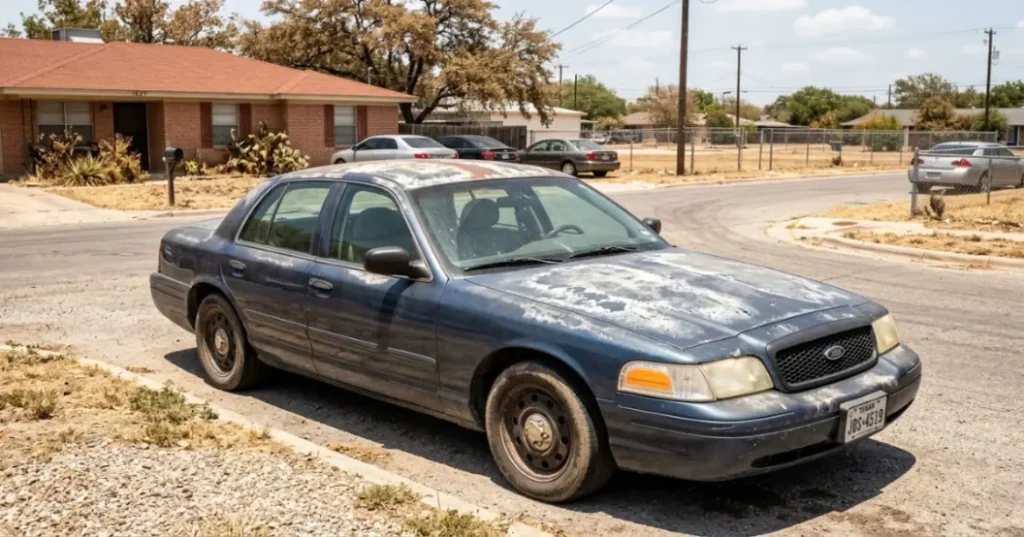
San Antonio sits in a climate that’s genuinely difficult for vehicle exteriors. The combination of intense UV radiation, triple-digit summer temperatures, and the fine limestone dust that drifts off the Hill Country roads creates a perfect environment for accelerated paint damage.
UV exposure breaks down clear coat over time, causing the paint beneath to oxidize and fade. You see this most often on hoods, roofs, and trunk lids — the horizontal surfaces that take the most direct sun.
Highway driving on I-35, Loop 1604, and US-281 also means constant exposure to road debris, tar, and bug splatter that bonds to paint and becomes increasingly difficult to remove the longer it’s left untreated. Vehicles parked outside in areas like Stone Oak, Alamo Heights, and downtown San Antonio usually show oxidation and clear coat fading much faster because of nonstop UV exposure and extreme summer temperatures.
A standard car wash won’t remove any of that. It barely touches the surface.
What Professional Detailing Actually Does
Professional detailing isn’t just a more thorough wash. It’s a multi-stage process that addresses the condition of your paint, not just the cleanliness of it.
A professional detail typically includes:
- A proper hand wash using pH-neutral, paint-safe products
- Clay bar treatment to pull bonded contaminants from the paint surface
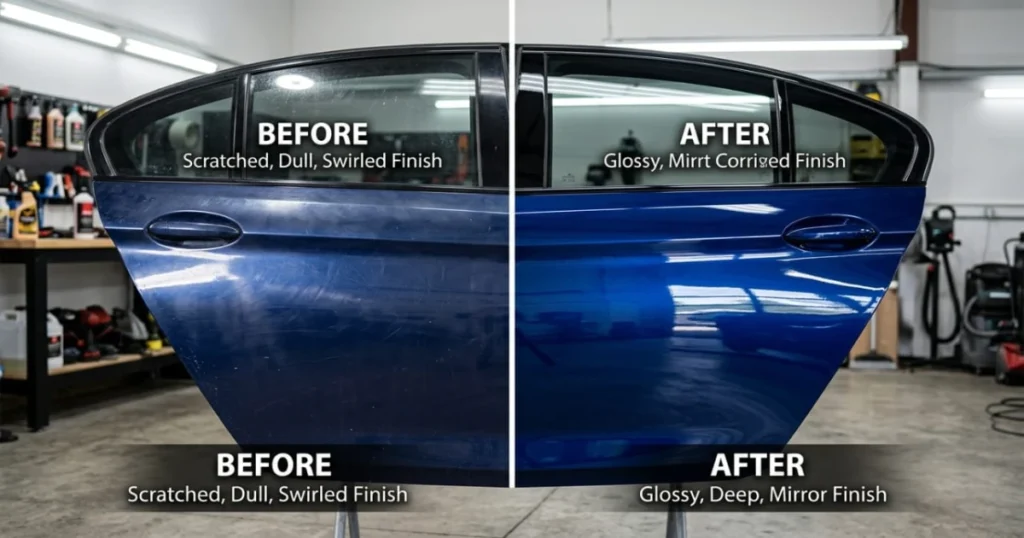
- Paint correction to reduce or eliminate swirl marks and light scratches
- Application of a professional-grade wax, sealant, or ceramic coating
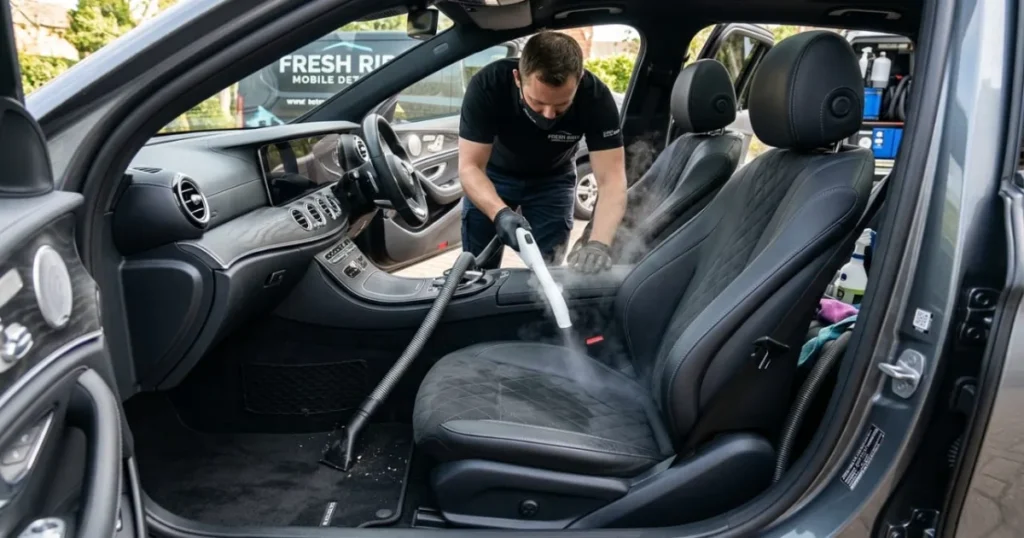
- Interior deep cleaning including upholstery, vents, door panels, and often steam cleaning for bacteria and odors
Each step builds on the last. You can’t properly protect paint that hasn’t been decontaminated. You can’t correct swirl marks without first removing surface debris. The prep work is what makes the protection last.
A quality exterior detail combined with a ceramic coating can protect your paint for one to three years depending on maintenance, versus a standard wash that protects nothing at all.
The Real Cost Comparison
People often justify skipping professional detailing because a car wash feels cheaper. And technically, it is — per visit.
But the math changes when you think about what you’re actually paying for over time.
| Regular Car Wash | Professional Detailing | |
| Average cost | $10–$30 | $150–$500+ |
| Protection added | None | Months to years |
| Paint damage risk | High (brush wash) | Minimal |
| Swirl mark risk | Very high | Very low |
| Interior treatment | None | Deep cleaned |
| Frequency needed | Weekly | Every 4–12 months |
| Long-term paint impact | Gradual degradation | Preservation |
Running your car through a brush wash once a week for a year costs anywhere from $500 to $1,500 — while steadily damaging the very paint you’re trying to clean. One professional detail with a quality sealant costs less and actually protects the investment.
Who Gets the Most Value from Professional Detailing
Professional detailing is a strong choice for:
- Daily drivers on San Antonio highways — constant road debris exposure makes protection more important, not less
- Vehicle owners planning to sell — a proper detail and paint correction can noticeably increase resale value
- Busy professionals — mobile detailing comes to your home or office, so there’s no time lost
- New car owners — applying ceramic protection early is significantly easier than correcting neglected paint later
- Anyone with a dark-colored vehicle — black, navy, and dark gray paint shows swirl marks and water spots most aggressively
When a Regular Car Wash Is Enough
Not every situation calls for a full detail, and a good detailing professional will tell you that.
A regular touchless wash between professional details is completely reasonable. If your car has a fresh ceramic coating or quality sealant in place, a gentle touchless wash every week or two is fine — the protection is already there.
Where regular washing becomes a problem is when it’s the only thing you’re doing, year after year, on a vehicle that’s accumulating damage without any restorative care.
If your paint is already in good shape and you have protection in place, a rinse is a rinse. If you’re starting from scratch, a wash isn’t going to get you there.
Maintenance Tips to Make Your Detail Last Longer
After a professional detail, how you maintain the vehicle matters. These habits extend your results significantly:
- Use a pH-neutral car wash soap when washing at home — dish soap and general household cleaners strip sealants fast
- Dry with a microfiber towel instead of letting the car air dry in the Texas sun, which leaves water spots
- Park in shade or a garage whenever possible — UV exposure is cumulative
- Apply a spray detailer or quick detail spray every few weeks to maintain the surface between full washes
- Don’t wait to remove bird droppings or bug splatter — the acids etch into paint quickly in high heat
- Schedule a maintenance detail every 4–6 months to keep protection topped up
Your mobile detailing service can recommend a maintenance schedule based on how and where you drive in San Antonio.
Frequently Asked Questions
How long does a professional detail last compared to a car wash? A professional detail with a quality sealant or ceramic coating typically lasts three months to over a year, depending on the product and maintenance. A standard car wash adds zero lasting protection — the surface is clean but unprotected as soon as it dries.
Can professional detailing remove swirl marks? Yes. Paint correction — which is part of a full exterior detail — uses polishing compounds to reduce or eliminate swirl marks from the clear coat. Automatic brush washes cannot remove them; they usually make them worse.
Is mobile detailing worth it in San Antonio? Absolutely. San Antonio’s UV intensity and heat accelerate paint fading and oxidation faster than in cooler climates. Mobile detailing is also convenient — a professional comes to your location, which saves time for busy residents and professionals.
What’s the difference between a sealant and ceramic coating? A paint sealant is a synthetic product applied by hand that bonds to the paint and lasts three to six months. A ceramic coating is a harder, more durable liquid polymer that bonds chemically to the surface and can last one to five years with proper care.
How often should I get my car professionally detailed? Most vehicles benefit from a full detail every four to six months, with lighter maintenance details in between. Vehicles driven daily on San Antonio highways, or those exposed to heavy sun without covered parking, may benefit from more frequent service.
Does interior detailing remove odors? Yes, particularly steam cleaning and professional odor removal treatments. Standard vacuuming removes debris but doesn’t eliminate embedded odors from pets, smoke, or food. Steam cleaning reaches upholstery fibers and vents where odors actually live.
Do I need paint correction before a ceramic coating? In most cases, yes. Applying a ceramic coating over scratched or swirl-marked paint seals those imperfections in permanently. Prep work — including decontamination and paint correction — is what determines how long and how well the coating performs.
Protect Your Paint Before San Antonio Takes It
San Antonio’s climate doesn’t give vehicles much of a break. Between the summer UV exposure, highway debris, and dusty conditions, paint takes a consistent beating. A weekly car wash keeps the dirt off. It doesn’t address any of the damage accumulating underneath.
Professional detailing is about protection, restoration, and preservation — not just cleanliness. When done right, it extends the life of your paint, maintains resale value, and keeps your vehicle looking like it deserves to.
Ready to stop letting the Texas sun win?
Book your mobile detailing appointment and we’ll come to you — no drop-off, no waiting, no wasted afternoon.
Or explore our full range of detailing services to find the right fit for your vehicle’s needs.
Mobile Detailing SA serves San Antonio and surrounding areas with professional auto detailing, ceramic coating, paint correction, interior detailing, and odor removal. All services use professional-grade, paint-safe products.